13.03.2026
Toxic Acid Rain Fell Over Tehran As Airstrikes Hit Oil Facilities
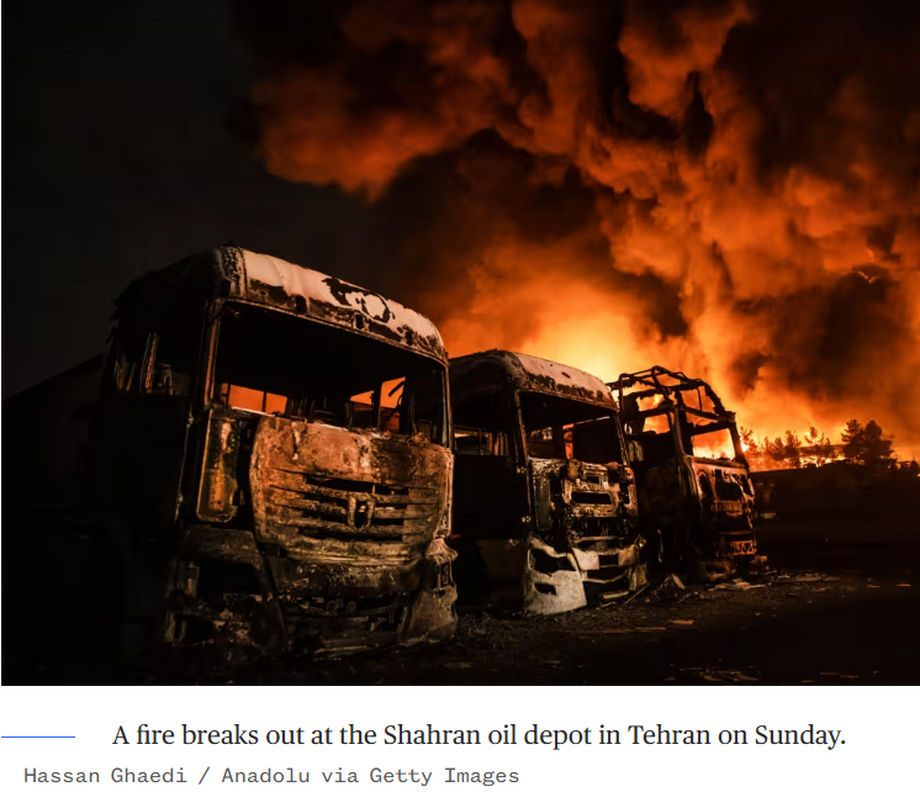
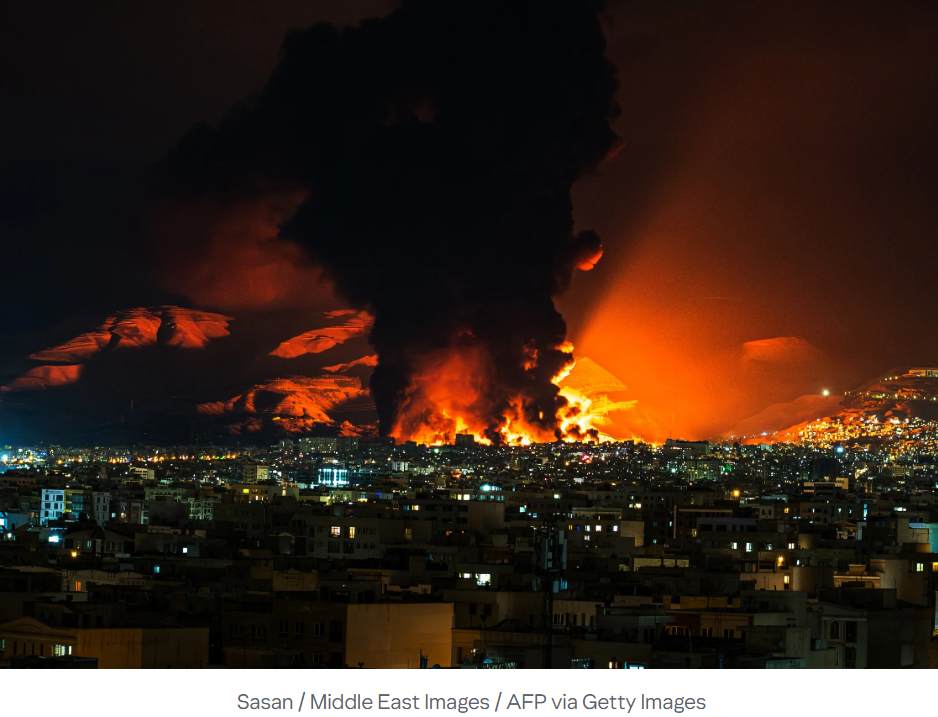
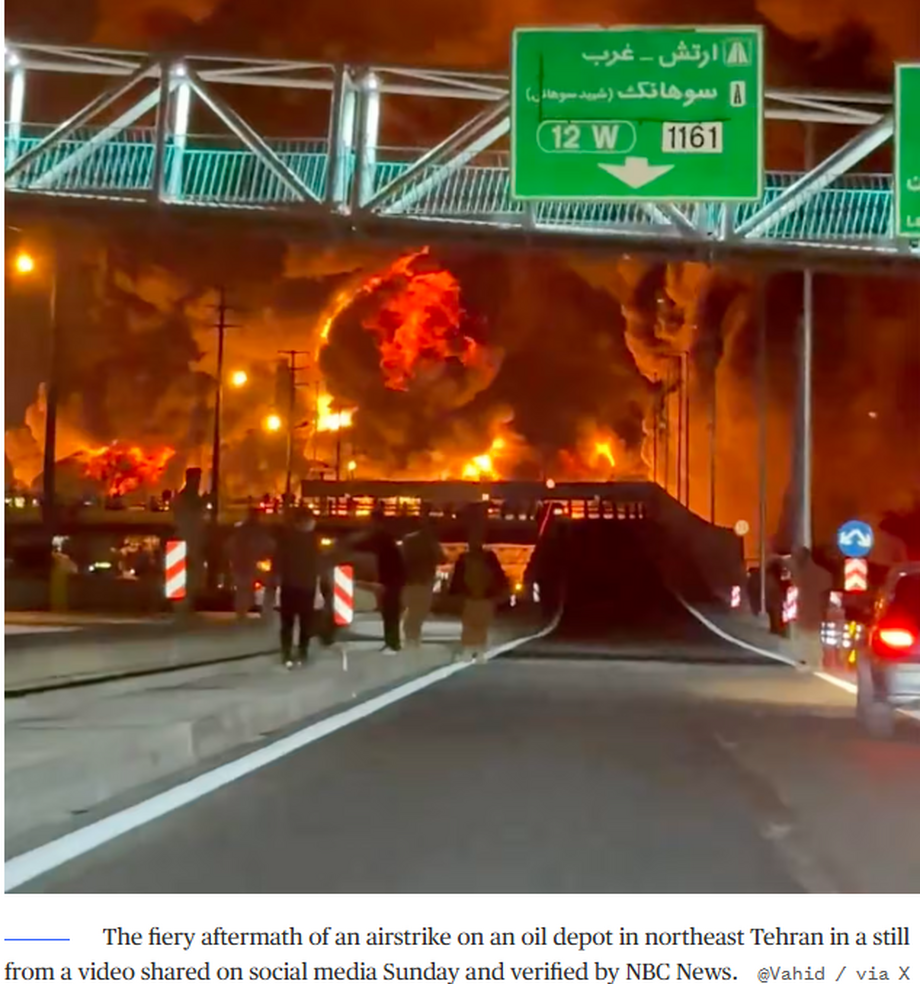
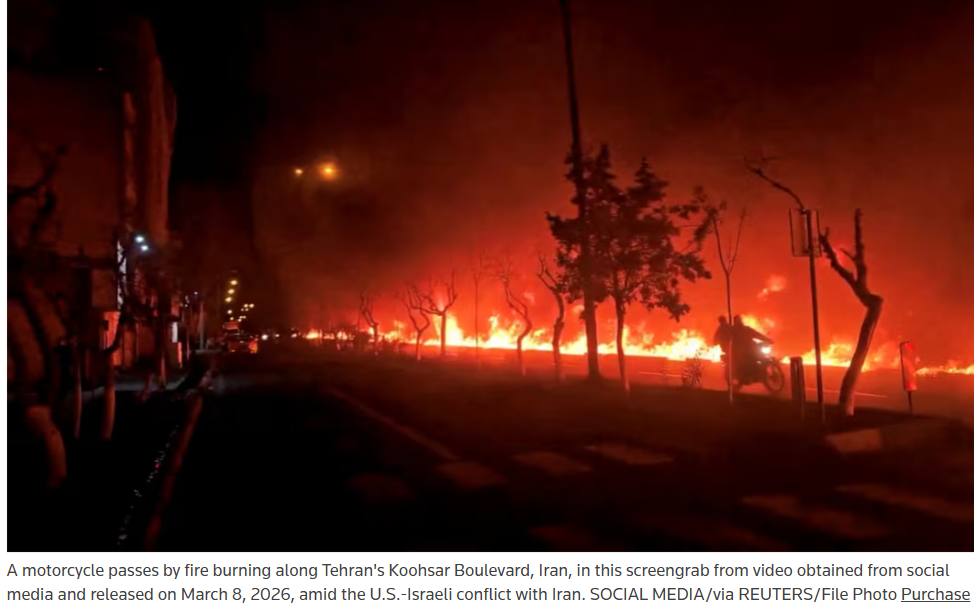
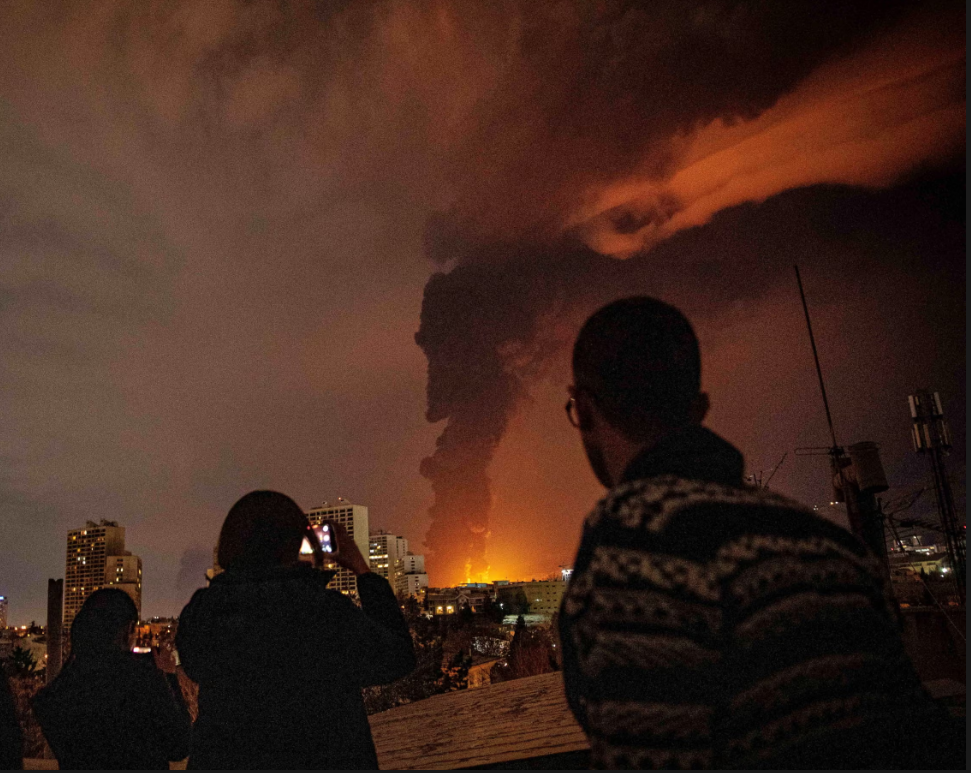
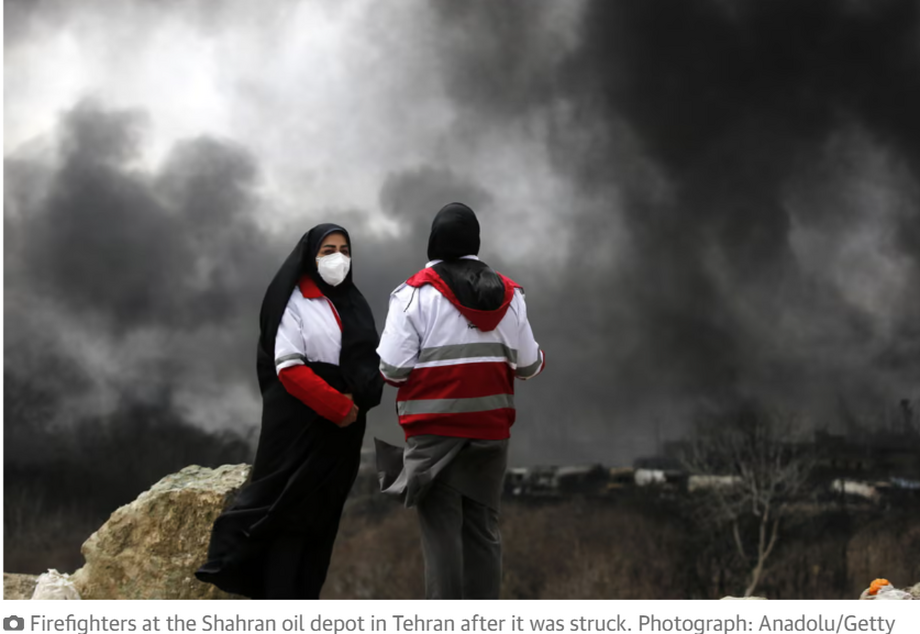
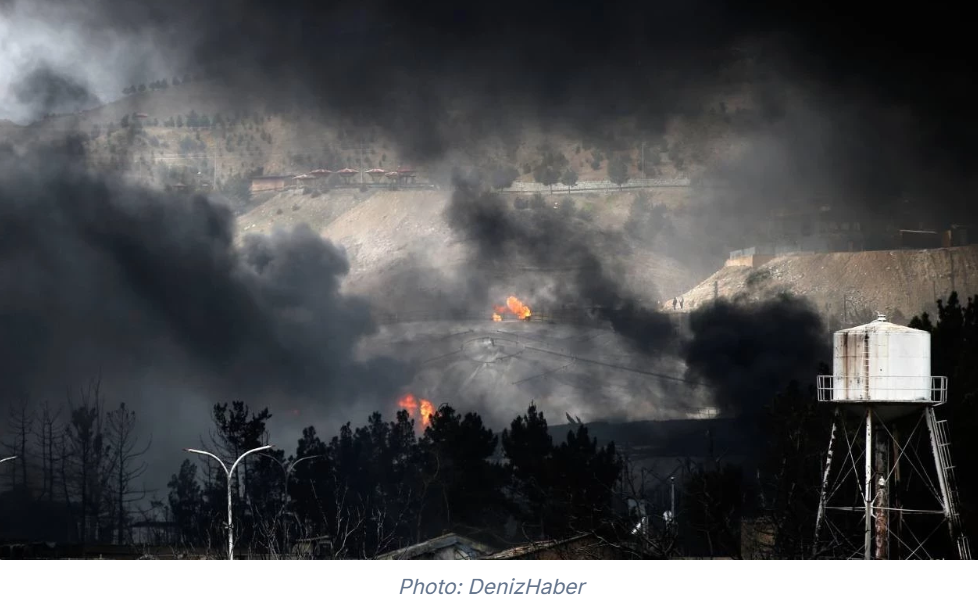
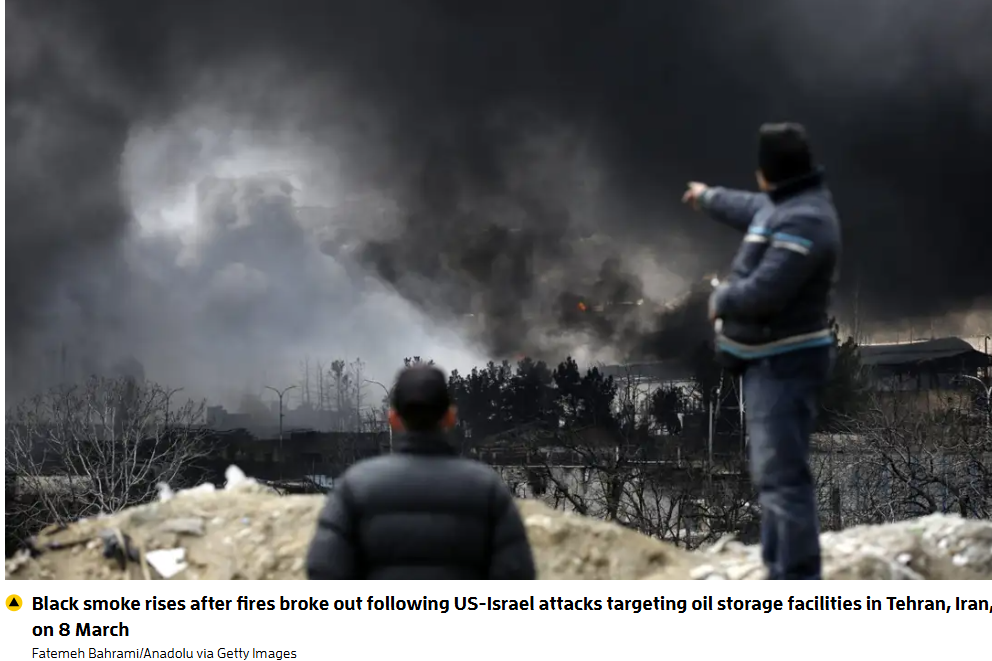
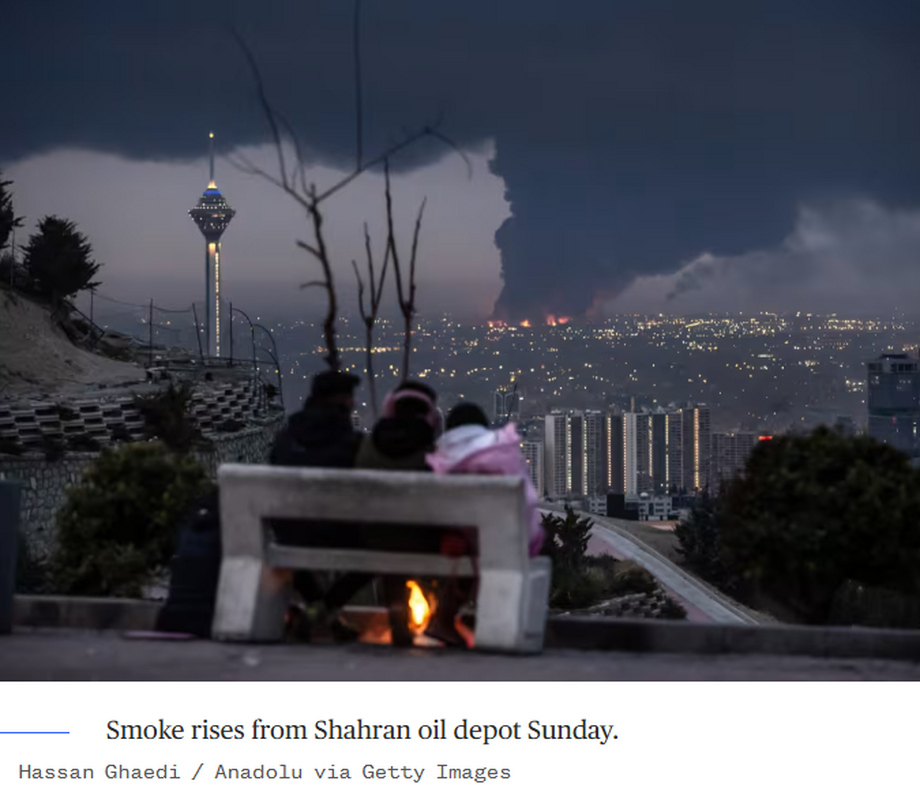
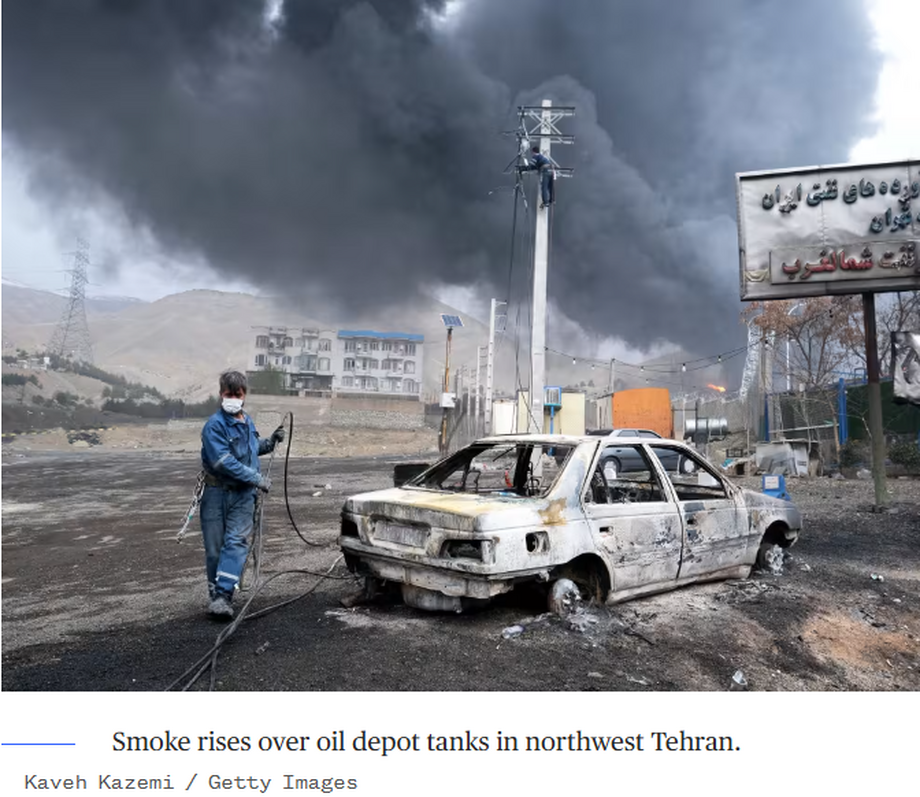
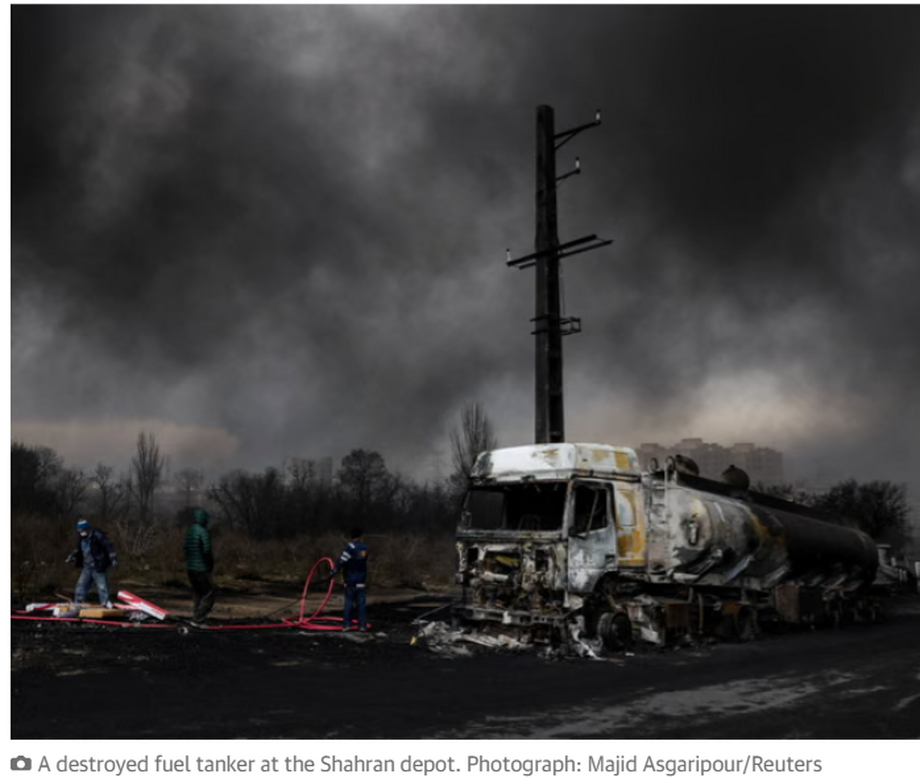
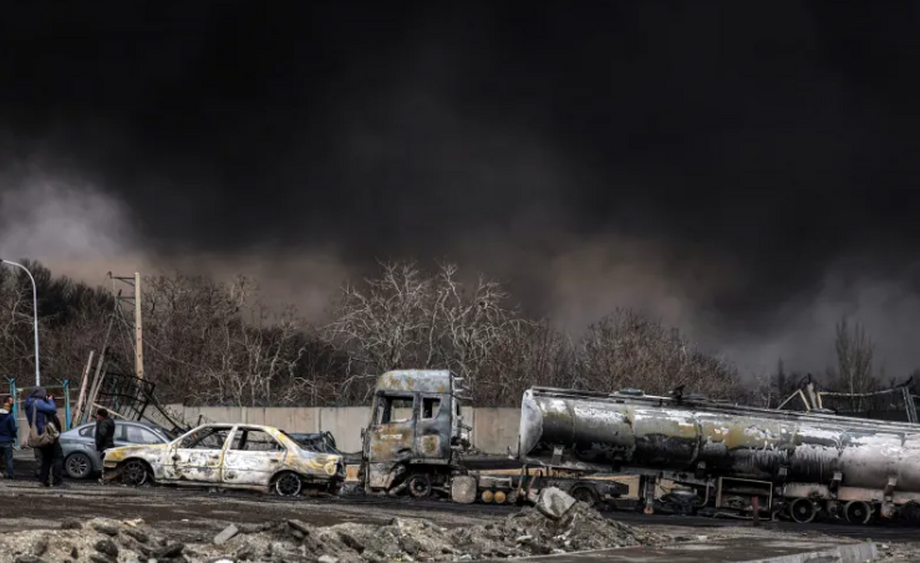
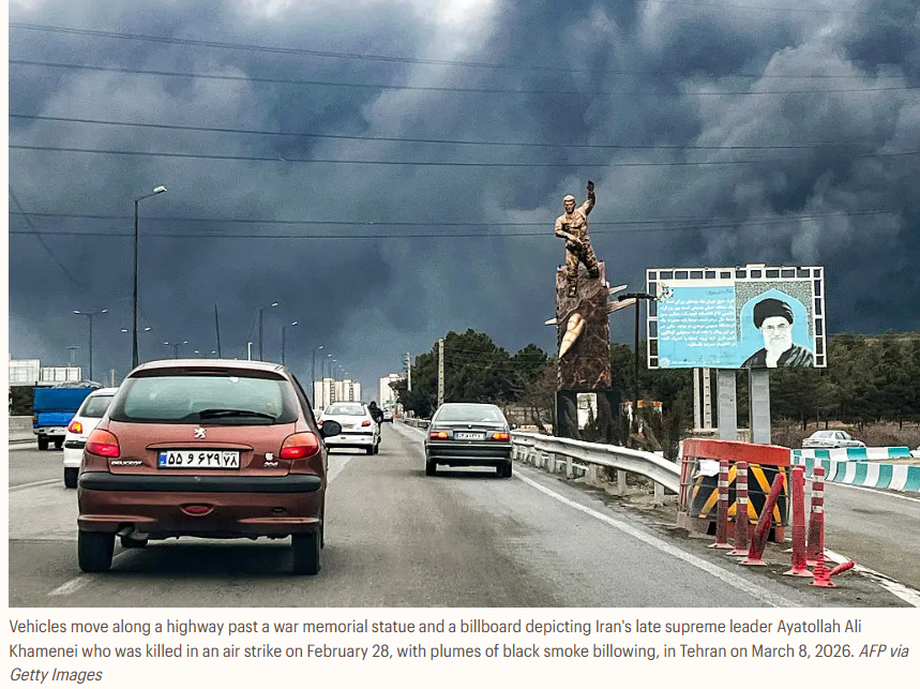
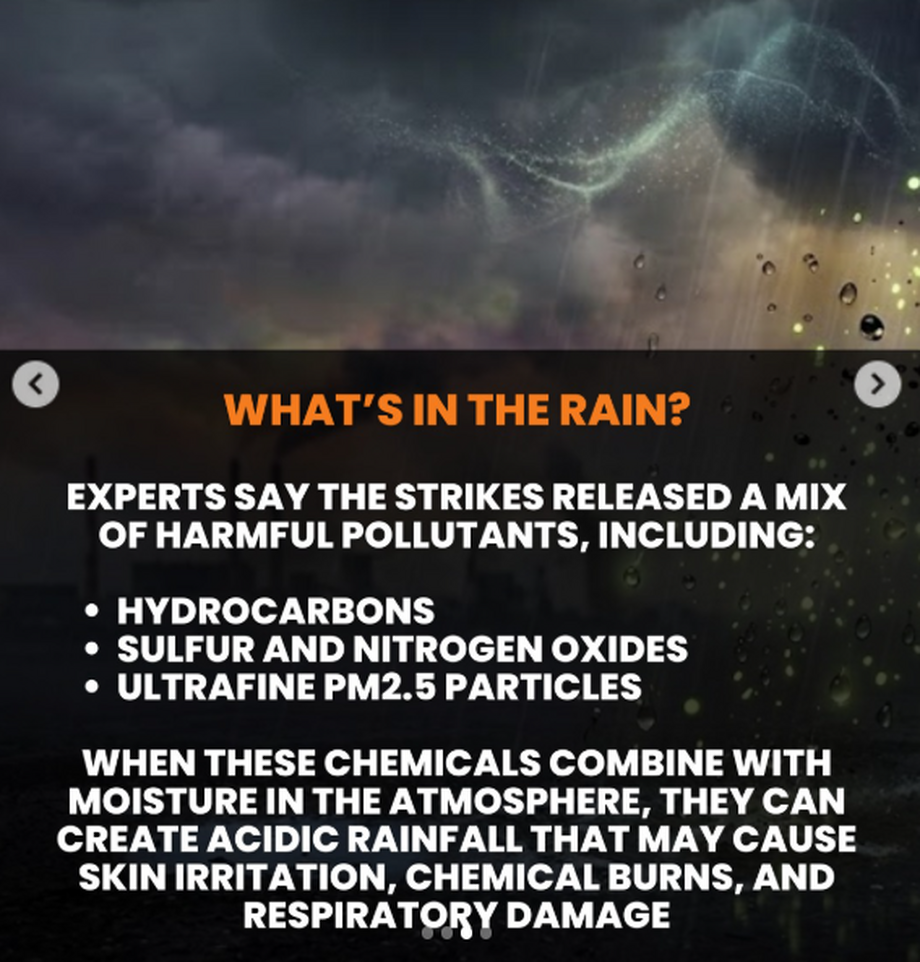
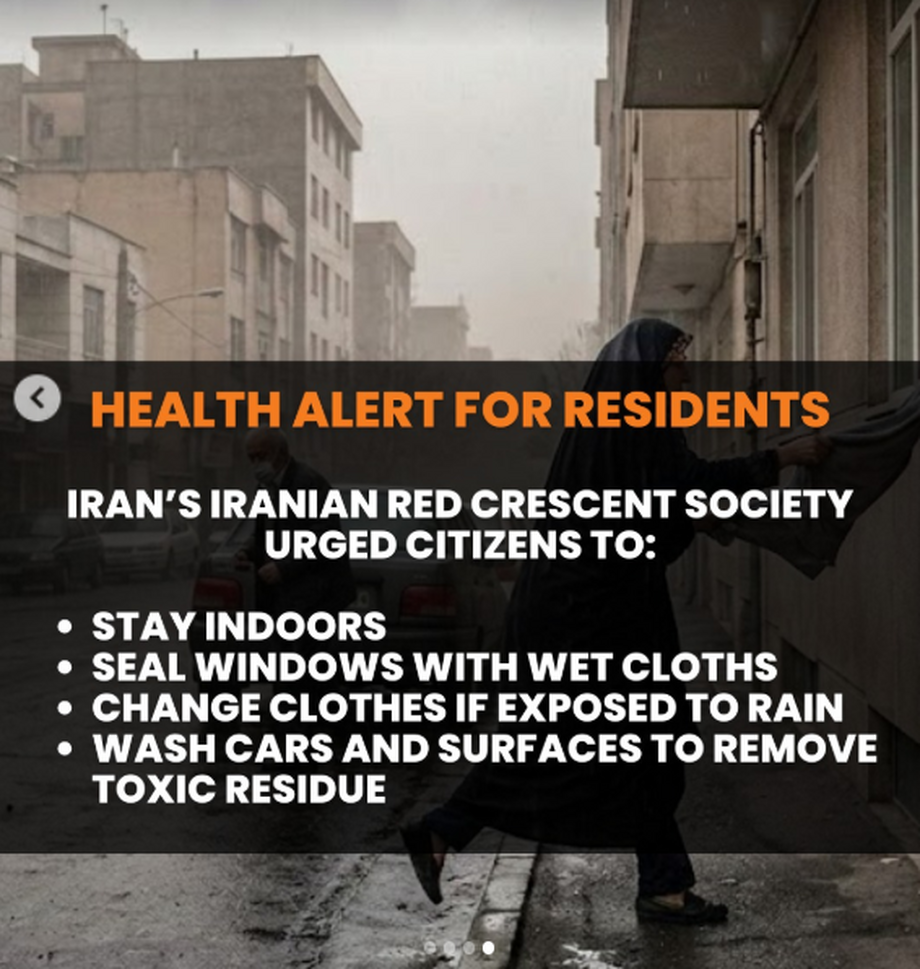
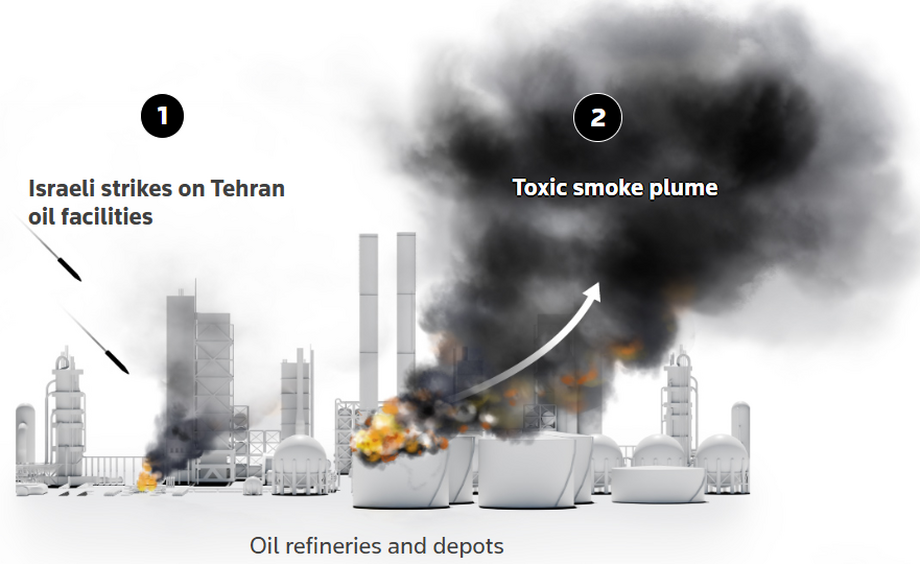
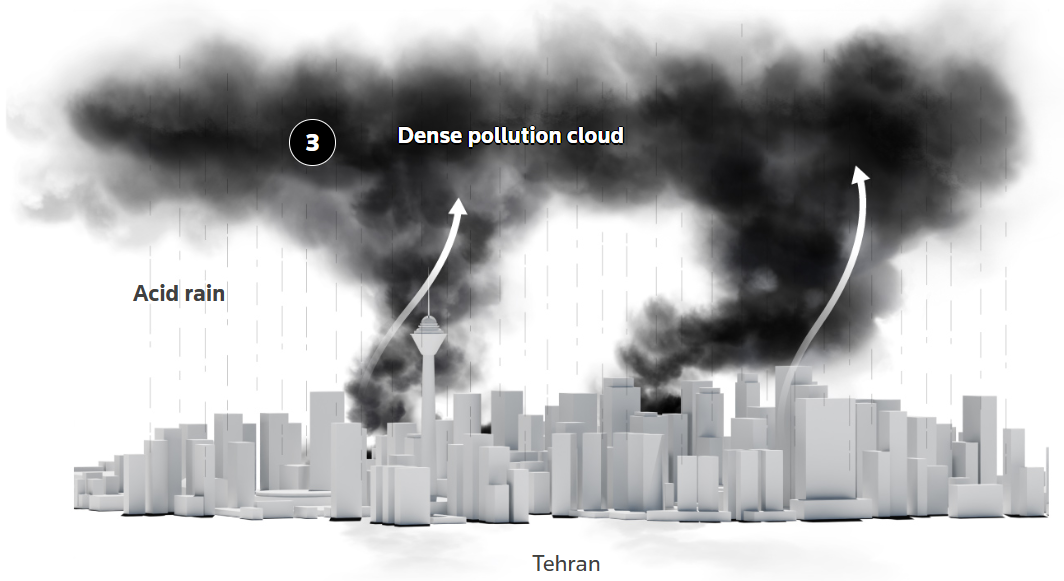
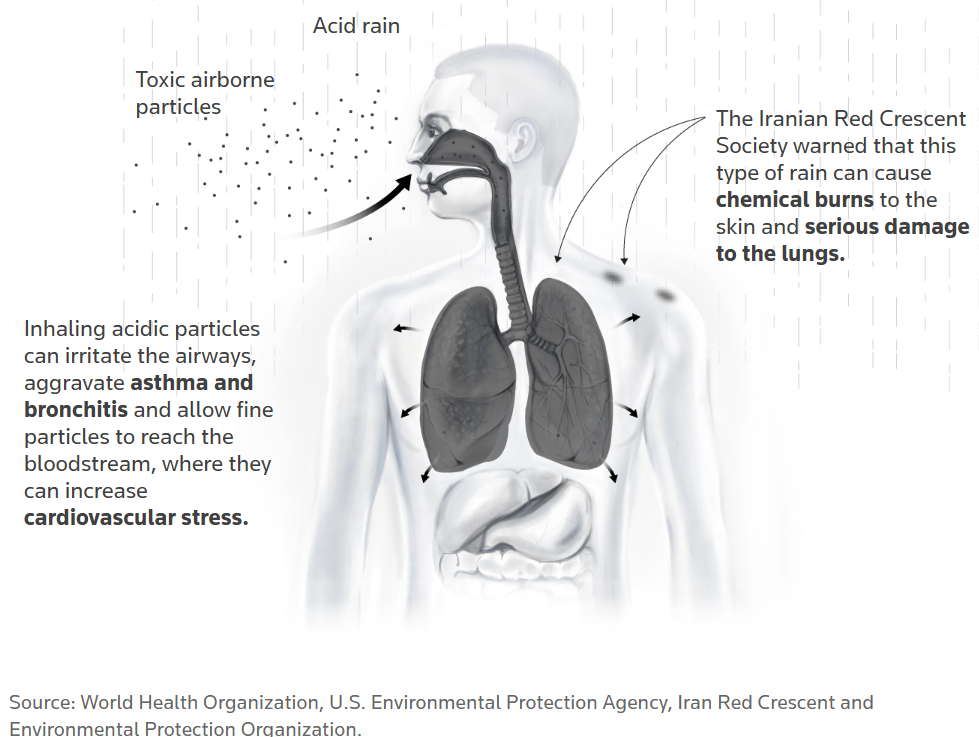
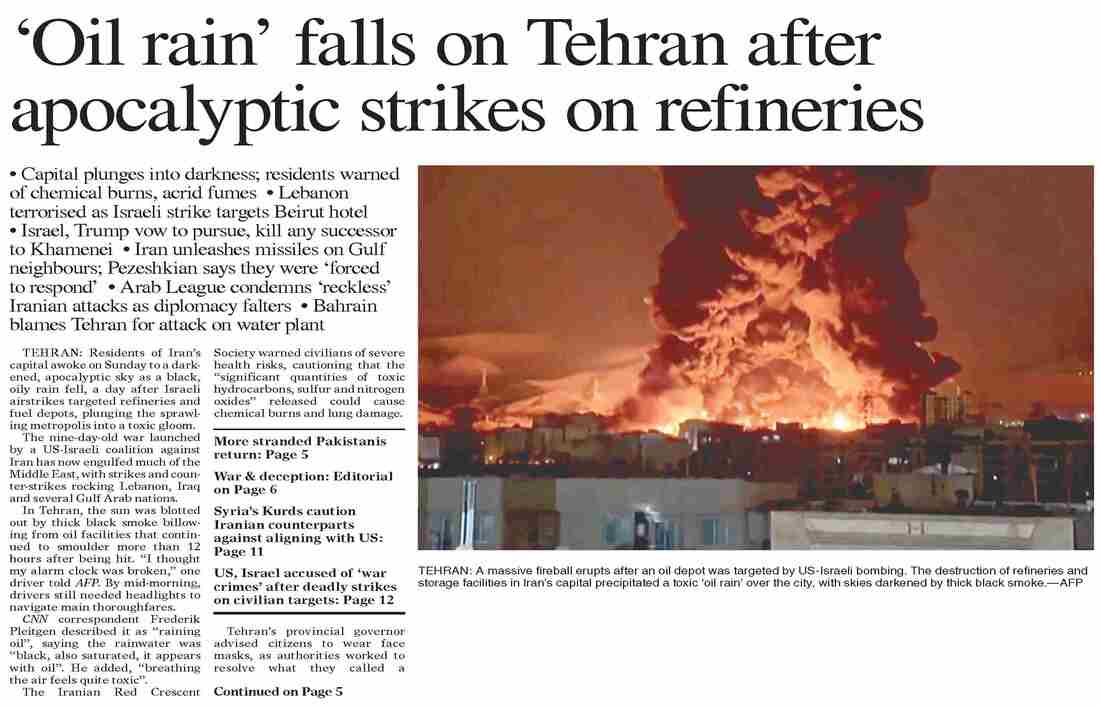
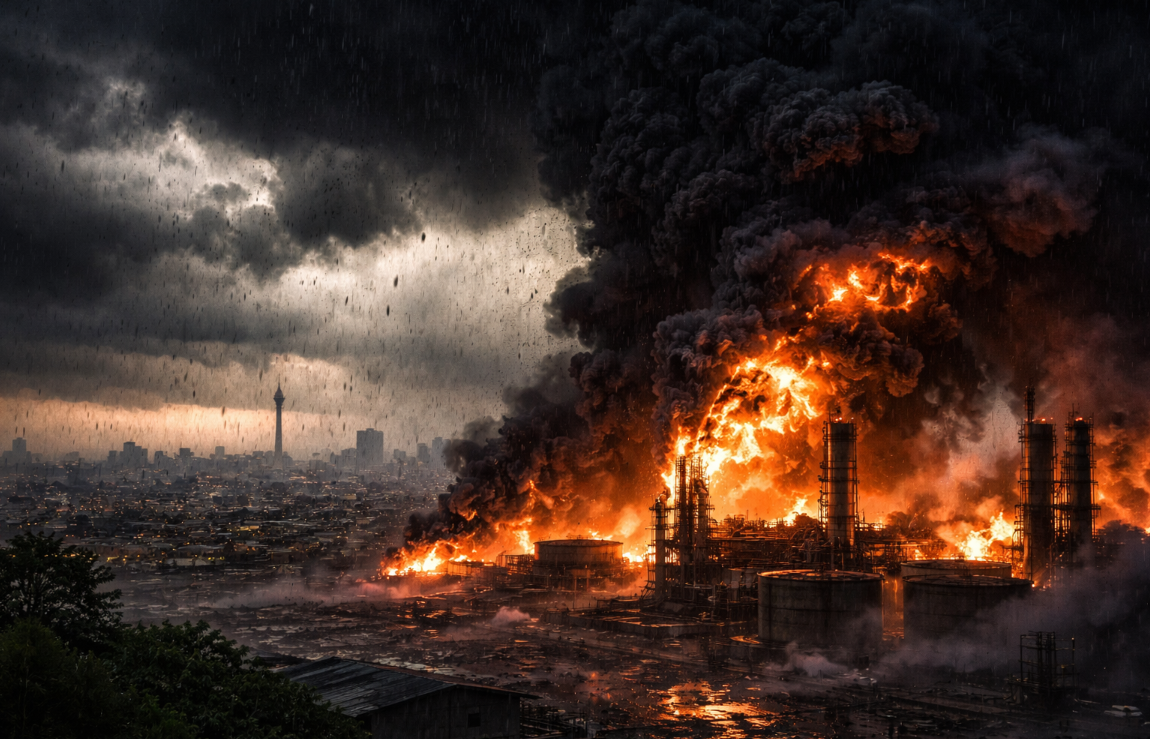
Iran’s capital was engulfed in a cloud of toxic smoke that unleashed black rainfall dozens of miles away on Sunday after overnight Israeli strikes on several fuel depots caused fires to burn for hours. Images from Tehran, a city of nearly 12 million people, showed thick black smoke from the fires hanging over it, while residents reported difficulty breathing and oil-tainted rainfall staining everything around them. Iran’s Red Crescent Society warned residents of Tehran and the surrounding region that the rainfall after the strikes could be “highly dangerous and acidic,” and could cause “chemical burns of the skin and serious damage to the lungs.” Iranian residents have reported headaches, difficulty breathing, and oil-contaminated rain settling on buildings and cars. The smoke from the bombed oil depots would also contain sulfur dioxide and nitrogen dioxide, which are precursors to forming sulfuric acid and nitric aid in the air. This acid then makes its way into water droplets, and is responsible for what we conventionally label acid rain. In the short term, people exposed to this black smoke in Iran might have headaches or difficulty breathing, especially if they have asthma or lung disease. Vulnerable populations – such as older people, young children and people with disabilities – are more at risk. Exposure to toxic air pollution during pregnancy can also lead to lower birth weights. In the longer term, exposure to the compounds in the air and in this black rain is potentially increasing people’s cancer risk. When ultrafine particles (PM2.5) are inhaled, they can get into your bloodstream. This has been linked to a range of health impacts including cancers, neurological conditions (such as cognitive impairment), and various cardiovascular conditions. Once these heavily polluted plumes of air have their pollutants rained into natural waterways, they can also start to affect aquatic life, as well as human drinking water sources.
Credit: DW
Credit: DW
Poverty deprives people of adequate education, health care and of life's most basic necessities- safe living conditions (including clean air and clean drinking water) and an adequate food supply. The developed (industrialized) countries today account for roughly 20 percent of the world's population but control about 80 percent of the world's wealth.
Poverty and pollution seem to operate in a vicious cycle that, so far, has been hard to break. Even in the developed nations, the gap between the rich and the poor is evident in their respective social and environmental conditions.
Poverty and pollution seem to operate in a vicious cycle that, so far, has been hard to break. Even in the developed nations, the gap between the rich and the poor is evident in their respective social and environmental conditions.